International Agro — Issue 17
In Brazil, Norway opened a zero-tariff beef quota on Sunday, but Brazilian beef is still barred for lack of proof Europe will accept. In Ukraine, the grain is in the silos, but no ship has a guarantee it will come back. In China, US soybeans come in through a promise only state firms keep.
English Gabriel Rondon
🌐 Em português: Agro Internacional — Edição 17
Brazil got a tariff door that the sanitary rule keeps shut, Ukraine has the grain but not the ship’s guarantee, and China buys US soybeans through a promise only the state carries out. Every week I read the world’s agriculture looking not for the news, but for the layer it hides.
In Brazil, on Sunday, 1 November 2026, the Mercosur-EFTA agreement took effect with Norway, with zero-tariff beef quotas.
In Ukraine, on 1 November, the Christian Science Monitor described farmers with full silos and no safe route to the sea.
In China, on 23 October, DatamarNews showed that Beijing had yet to announce new purchases of US soybeans after the meeting between Donald Trump and Xi Jinping.
It looks like three stories. It is one.
Brazil: the beef exists, the tariff fell, what is missing is proof Europe accepts
In last week’s issue, Argentine beef sold to Europe was worth $14,615 per ton, almost double other destinations, according to consultant Víctor Tonelli in La Nación. Brazilian beef does not compete for that price. It is off the list.
On 12 May 2026, the European Union announced it was removing Brazil from the list of countries approved to export animal products, effective 3 September, according to Agência Brasil. The list covers beef, poultry, eggs, honey and fish.
The reason is not sanitary in the classic sense. It is about proof. According to Agência Brasil, Brazil “did not provide sufficient guarantees on the control of antimicrobial use in livestock.” Argentina, Paraguay and Uruguay remain approved.
In April, Brazil’s Agriculture Ministry banned certain growth promoters. It was not enough. According to Folha Agrícola, republished by Fundesa on 11 August 2026, the European assessment was that the controls relied heavily on records and declarations made by the production chain itself.
Now the new door. Secex Ordinance No. 548, published on 19 October 2026, governs the Mercosur-EFTA quotas for Norway, according to BeefPoint, citing Feed&Food, on 22 October.
For November and December, the beef quota is 111 tonnes carcass-weight equivalent, at zero tariff. It is not Brazil’s alone: it is shared by the Mercosur countries and allocated in order of application.
The path is all paper. The exporter files a licence in the LPCO module of the Portal Único Siscomex, has 60 days to link it to the Single Export Declaration and, after clearance, receives a “Mercosur Quota Authorization Certificate,” according to BeefPoint. Norway itself still uses auctions to distribute import rights.
But Norway belongs to the European Economic Area and follows the EU’s sanitary rule. On 29 October, Norway’s ambassador to Brazil, Kjetil Elsebutangen, said the block “is not a Norwegian trade measure against Brazil,” according to SBT News. “We need to wait for this process and its conclusion,” he said.
In poultry and honey, the proof moved forward. The DG Santé audit, carried out between 24 August and 4 September, concluded there was no technical obstacle to relisting poultry establishments, according to Agrimídia on 29 September, citing the Agriculture Ministry. The ministry asked for the report to go on the agenda of the Scopaff committee on 20 and 21 October.
For beef, the government was still waiting for an on-site European audit, according to O Tempo on 11 September 2026.
The hidden machinery: the tariff fell and the beef is still on this side. What separates the Brazilian steer from the Norwegian plate is neither tax nor volume. It is the gap between a record the chain keeps about itself and a check the buyer accepts. The poultry audit shows the way: the proof started to count when a third party went to look.
Ukraine: the grain exists, what is missing is the guarantee that the ship comes back
In Issue 14, Ukraine was knocking on the European Union’s door with its wheat. This week the problem is not the door. It is the sea.
According to the Christian Science Monitor of 1 November 2026, cargo handling at the ports of Odesa, Chornomorsk and Pivdenny fell more than fifteenfold after 22 July, according to Ukraine’s infrastructure minister.
Grain and pulse exports stood at 6.22 million tonnes in the marketing year to 26 October, according to the Ministry of Agrarian Policy, citing the State Customs Service, in data reported by Finway. Wheat went from 6.18 million tonnes a year earlier to 3.5 million.
The grain has not disappeared. It is stored. On 25 August, minister Taras Vysotskyi told Hromadske that storage could run out as early as November if attacks kept blocking exports.
What changed since 2022 is the guarantee. That year’s grain deal, brokered by the UN and Turkey, gave ships safe passage. Russia left a year later, and the corridor Ukraine set up in its place carries no international guarantees, according to the Monitor.
Without a guarantee, there is no insurance. According to CNBC on 10 October 2026, the Black Sea attacks made it impossible to insure commercial ships. On 1 October, Bloomberg reported that Turkey and the UN were trying to open new talks on a Black Sea truce.
The cost shows up on the farm. Farmer Viktor Kozhukharenko, who works 15,000 hectares, used to pay $33 to move a ton and now pays $70 via the Danube, according to the Monitor. “Without the sea, we have nothing,” he said.
The state tried to turn idle grain into credit. On 31 July, Vysotskyi announced loans secured by stored grain, according to UkrAgroConsult. The National Bank raised the collateral ratio for agricultural products from 0.4 to 0.75, according to USM Media on 14 August.
The hidden machinery: Ukrainian wheat has lost neither quality nor buyers. It lost the guarantor of the voyage. Without a third party guaranteeing passage, the insurer does not sign, and the grain becomes inventory. The state answers by rewriting how much that inventory is worth as collateral at the bank. Same harvest, different paper around it.
China: the soybeans exist on both sides, what picks the seller is a state promise
In Issue 15, I looked at the soybean deal from the American side, where demand had become a state promise. This week, the buyer’s side.
According to DatamarNews on 23 October 2026, with data from consultancy Biond Agro, China has contracted 13.73 million tonnes of US soybeans for 2026, against a commitment of at least 25 million per year from 2026 to 2028. About 11.3 million remain.
China’s total tariff is 13% on US soybeans and 3% on Brazilian soybeans, according to Biond Agro. “China is entering the coming months with a significant portion of its requirements already covered,” said analyst Isabella Pliego.
The promise is not kept by the market. According to economist Fred Gale, formerly of USDA, in an analysis for Czarnikow on 26 June 2026, all 8.38 million tonnes of US soybeans imported from January to May came from Beijing-registered companies, something only COFCO and Sinograin could do.
“Chinese authorities have no mechanism to mandate that multinationals and private companies buy US soybeans,” Gale wrote. State-owned firms account for 35% to 40% of imports, according to him.
The rest of the market buys where price dictates. For March 2027, 6.73 million tonnes of Brazilian soybeans are already contracted, according to Biond Agro.
The hidden machinery: US and Brazilian soybeans are interchangeable at the crusher. What decides the origin is who signs the commitment and who is bound to keep it. A promise between governments only reaches the companies the government controls. Brazil wins where trust is market-based, and the United States where it is state-based.
The synthesis: the commodity is there, what is missing is a guarantee the other side accepts
Take the three out of this week’s headlines.
In Brazil, the beef exists and the tariff fell, but the proof on antimicrobials does not convince the buyer. In Ukraine, the grain exists and so does the buyer, but nobody guarantees the voyage. In China, the soybeans exist in both hemispheres, but the purchase promise only holds where the state is in charge.
In none of the three is the problem the physical thing.
What decides is the guarantee: the check a third party accepts, the guarantor that makes the ship insurable, the commitment someone is actually bound to keep. When it is missing, the goods sit still, get barred or get diverted.
It is the lesson Brazil knows from the inside: the world’s largest herd barely becomes capital, not for lack of cattle, but for lack of proof a third party will accept. (I wrote about this in The Cattle That Won’t Become Capital.)
The next frontier in agriculture is not producing more. It is building guarantees the other side accepts without having to take the seller’s word for it.
Notes and sources (week of 2 November 2026)
- Brazil, removal from the EU list announced on 12 May 2026, effective 3 September, products affected, lack of guarantees on antimicrobials, Argentina, Paraguay and Uruguay approved: Agência Brasil, 12 May 2026. European assessment on records and declarations of the chain and April ban on growth promoters: Folha Agrícola via Fundesa, 11 August 2026.
- Brazil, Secex Ordinance No. 548, 111-tonne beef quota for November and December, order of application, LPCO, 60 days to the export declaration, Mercosur Quota Authorization Certificate, Norwegian auctions: BeefPoint, citing Feed&Food, 22 October 2026. Statements by ambassador Kjetil Elsebutangen and entry into force on 1 November: SBT News, Caio Barcellos, 29 October 2026.
- Brazil, DG Santé audit on poultry and honey and Scopaff agenda of 20 and 21 October: Agrimídia, 29 September 2026. Wait for a European audit on beef: O Tempo, 11 September 2026.
- Ukraine, port cargo down more than fifteenfold, storage capacity of 59 million tonnes (FAO), the 2022 deal and the corridor without international guarantees, costs of $33 and $70 and Viktor Kozhukharenko’s statement: Christian Science Monitor, Dominique Soguel, 1 November 2026. Exports of 6.22 million tonnes and wheat: Finway, with Ministry of Agrarian Policy data, 26 October 2026.
- Ukraine, storage warning for November: Hromadske, 25 August 2026. Insurance impossible in the Black Sea: CNBC, 10 October 2026. Turkey and UN talks: Bloomberg, 1 October 2026. Grain-backed loans: UkrAgroConsult, 31 July 2026. Collateral ratio from 0.4 to 0.75: USM Media, 14 August 2026.
- China, 13.73 million tonnes contracted, 25 million commitment, 13% and 3% tariffs, 6.73 million tonnes of Brazilian soybeans for March and Isabella Pliego’s statement (Biond Agro): DatamarNews, Gabriel Malheiros, 23 October 2026. Imports by Beijing companies, 8.38 million tonnes, state share and Fred Gale’s statement: Czarnikow, 26 June 2026.
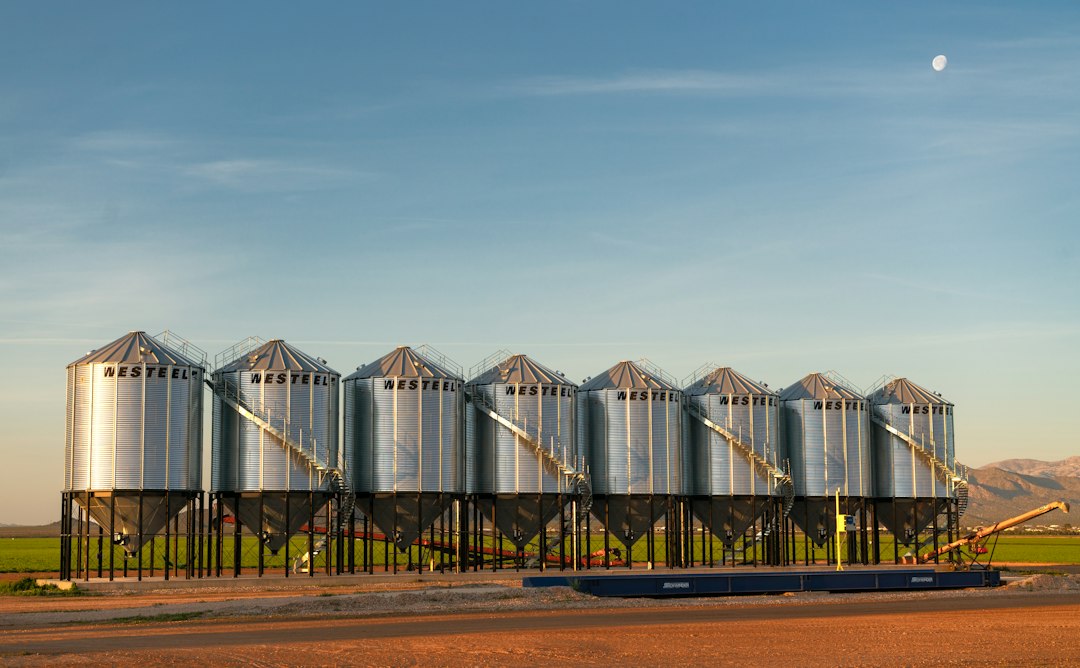
- Photo: Jim Witkowski / Unsplash