International Agro — Issue 19
In Ukraine, the grain is in storage and the border post has become a target, so Kyiv wants to move the stamp somewhere else. In the United States, China promised 25 million tonnes of soybeans, but nobody agrees on which calendar the promise is counted against. In Europe, the UK accepts Brussels' rules so that its meat no longer needs paperwork at the border.
English Gabriel Rondon
🌐 Em português: Agro Internacional — Edição 19
Ukraine wants to move the post where its grain is checked into another country, the United States is chasing a soybean promise with no shared calendar to count it, and Europe offers the UK an end to border paperwork in exchange for its rules. Every week I read the world’s agriculture looking not for the news, but for the layer it hides.
In Ukraine, on 10 November 2026, the United States Department of Agriculture (USDA) cut the country’s projected corn and wheat exports again because of the war in the Black Sea, according to the WASDE report.
In the United States, on 6 November, Trade Representative Jamieson Greer pressed China for “concrete actions” to honour the farm commitments it has already signed, according to the Office of the United States Trade Representative (USTR).
In the European Union, on 3 November, a 200-page draft of the sanitary and phytosanitary agreement with the United Kingdom circulated among member states, according to BM Magazine, citing the BBC.
It looks like three stories. It is one.
Ukraine: the grain exists, what is under attack is the place where it is checked
In issue 17, Ukrainian wheat had lost the guarantor of its sea voyage. This week, the problem shows up on land, in the queue at the border post.
On 10 November 2026, the USDA cut Ukraine’s 2026-27 corn exports from 22 to 20 million tonnes and wheat exports from 12.5 to 11.5 million, according to the WASDE. In the same report, corn ending stocks rose from 5.53 to 7.53 million tonnes.
“The conflict in the Black Sea region continues to reduce shipments,” the USDA wrote, “despite efforts to utilize alternative ports and transportation modes.”
The grain is there. Wheat production was even revised up, from 26 to 26.5 million tonnes, according to the same WASDE. What does not move is the exit.
On 23 October, Reuters, citing the Financial Times, reported that Ukraine is negotiating with Poland and Slovakia to move customs checks on grain trucks inside those countries. The reason: Russian drones strike the queues of trucks waiting near the Ukrainian border.
Kyiv has already set up joint control points with Moldova and wants to expand the model, according to Ukraine’s foreign ministry. Spokesperson Heorhii Tykhyi spoke of a “new security environment where Russia is deliberately trying to strike our borders”.
On 14 November, Agrarian Policy minister Taras Vysotskyi took the issue to EU Agriculture Commissioner Christophe Hansen, according to UkrAgroConsult, citing LB.ua. Alternative routes can handle only about half of the required volume, the ministry said, and simplifying cross-border transport procedures would allow 1 million more tonnes of exports per season.
The ministry also warned that, if nothing improves, part of the land may go unsown next spring.
The hidden machinery: the corn truck is the same before and after the barrier. What holds it is the point where two states inspect the load and hand responsibility for it to each other. That point has become a target. Moving the check inside Poland requires Warsaw to accept stamping, on its own territory, a paper that today belongs to Ukraine. The harvest depends less on roads than on an agreement about whose stamp it is.
United States: the soybeans exist, what is missing is a shared calendar to count the promise
In issue 15, I looked at soybeans from the American side, where demand had become a state promise. In issue 17, from the Chinese side, where only state firms fulfil it. This week the question is different: who counts, and until when.
On 6 November 2026, Greer and Treasury Secretary Scott Bessent held a videoconference with Chinese Vice Premier He Lifeng. Greer stressed “the critical importance of China taking concrete actions to fully implement its past commitments”, especially on farm purchases, according to USTR.
The commitment is in writing. The White House announced on 1 November 2025 that China would buy “at least 25 MMT of U.S. soybeans in each of 2026, 2027, and 2028”.
What is not in writing is what “2026” means. According to Agri-Pulse on 24 September 2026, Jim Sutter, CEO of the U.S. Soybean Export Council, reads the commitments on a marketing-year basis, running from 1 September to 31 August. Dan Basse of AgResource reads it as China having to secure the 25 million by 31 December.
Each also counts differently. By Reuters’ calculations, China had about 15 million tonnes bought in mid-October, according to Farm Policy News on 16 October. By AgResource’s analysis, it was more than 18 million, according to Brownfield on 27 October.
It is not the first time. In 2025, the White House wrote that China would buy 12 million tonnes “during the last two months of 2025”. In December, before the Senate, Greer said the deadline applied “for this growing season” and called the gap “a discrepancy”, according to NBC News on 9 December 2025.
The hidden machinery: the Iowa soybeans are harvested and the ship can sail. What is missing is a ledger both governments accept as official, with the same closing date. Without it, the promise never really falls due: each side picks the yardstick that suits it, and the American farmer plants the next crop without knowing whether the commitment was met or postponed.
European Union: the meat exists, what is negotiated is who writes the rule that waives the paperwork
The UK produces sausages, burgers, shellfish and seed potatoes. Since Brexit, some of that cannot enter the European Union, according to the British government.
A sanitary and phytosanitary (SPS) agreement with Brussels would change that. The 200-page draft circulated on 3 November 2026, and formal sign-off is expected at the EU-UK summit on 20 November in Brussels, according to the British Agriculture Bureau.
What goes is paperwork. Export Health Certificates, which can cost up to £200 per consignment, would no longer be required, and the agreement is due to take effect in mid-2027, according to the official business.gov.uk portal.
What comes in its place is the European rule. Under the common understanding of 19 May 2025, the agreement requires “timely dynamic alignment of the rules applicable to and in the United Kingdom”, with “a short list of limited exceptions” that cannot lead to lower standards than the EU’s, according to the text published by the British government.
And Brussels interprets. The same text says the Court of Justice of the European Union “is the ultimate authority for all questions of European Union law”. The UK gains a voice in shaping the rules, but not in the Council.
British farming feels the price. “British farmers could find themselves bound by EU rules on everything from pesticides to animal health,” CLA president Gavin Lane told Farmers Guide on 3 November.
The hidden machinery: British sausages did not become safer between 2020 and 2026. What changes is that Europe stops checking every consignment because it starts trusting the rule that produced that consignment. The certificate leaves the border and moves into legislation. The European Union is not selling market access. It is selling the right to be believed without showing paper, and it charges in regulatory sovereignty.
The synthesis: the commodity is there, what is contested is where the stamp sits
Take the three out of this week’s headlines.
In Ukraine, the grain exists, and the post where two states check it has become the weakest point in the chain. In the United States, the soybeans exist, and the promise to buy them has no calendar both sides accept. In the European Union, the meat exists, and ending the paperwork at the border costs adopting the rules of whoever does the checking.
In none of the three is the problem the physical thing.
What is contested is the place of verification: at the barrier, in the ledger or in the law. Whoever controls that place decides how much proof costs, and who pays for it. The further from the border trust can be verified, the less of the commodity sits in the queue.
It is the lesson Brazil knows from the inside: the world’s largest herd barely becomes capital, not for lack of cattle, but for lack of proof a third party will accept. (I wrote about this in The Cattle That Won’t Become Capital.)
The next frontier in agriculture is not producing more. It is deciding where the check happens, and who signs it.
Notes and sources (week of 16 November 2026)
- Ukraine, corn exports from 22 to 20 million tonnes, wheat from 12.5 to 11.5 million, wheat production from 26 to 26.5 million, corn ending stocks from 5.53 to 7.53 million, Black Sea quote: USDA, WASDE-677, 10 November 2026.
- Ukraine, talks with Poland and Slovakia to move customs checks inside the EU, joint control points with Moldova, Heorhii Tykhyi’s statement: Reuters via Cyprus Mail, citing the Financial Times, 23 October 2026.
- Ukraine, Taras Vysotskyi’s meeting with Christophe Hansen, alternative routes at about half the required volume, 1 million more tonnes per season with simpler border procedures, risk of unsown land: UkrAgroConsult, citing LB.ua, 14 November 2026.
- United States, Greer and Bessent’s videoconference with He Lifeng and Greer’s statement: USTR, 6 November 2026. Commitments of 12 and 25 million tonnes: White House, 1 November 2025.
- United States, Jim Sutter’s (marketing year) and Dan Basse’s (calendar year) readings: Agri-Pulse, Kim Chipman and Olivia M. Bridges, 24 September 2026. About 15 million tonnes by Reuters’ calculations: Farm Policy News, 16 October 2026. More than 18 million by AgResource: Brownfield, Carah Hart, 27 October 2026.
- United States, Greer before the Senate and the 2025 deadline “discrepancy”: NBC News, Steve Kopack, 9 December 2025.
- European Union, 200-page draft circulated on 3 November: BM Magazine, citing the BBC, 3 November 2026. Summit on 20 November in Brussels: British Agriculture Bureau, updated 12 October 2026.
- European Union, certificates of up to £200 per consignment, entry into effect in mid-2027, resumption of sausages, burgers, shellfish and seed potatoes: business.gov.uk, updated 12 August 2026. Dynamic alignment, exceptions, Court of Justice and decision-shaping (paragraphs 25 to 30): EU-UK Common Understanding, gov.uk, 19 May 2025. Gavin Lane’s statement: Farmers Guide, Charlie Reeve, 3 November 2026.
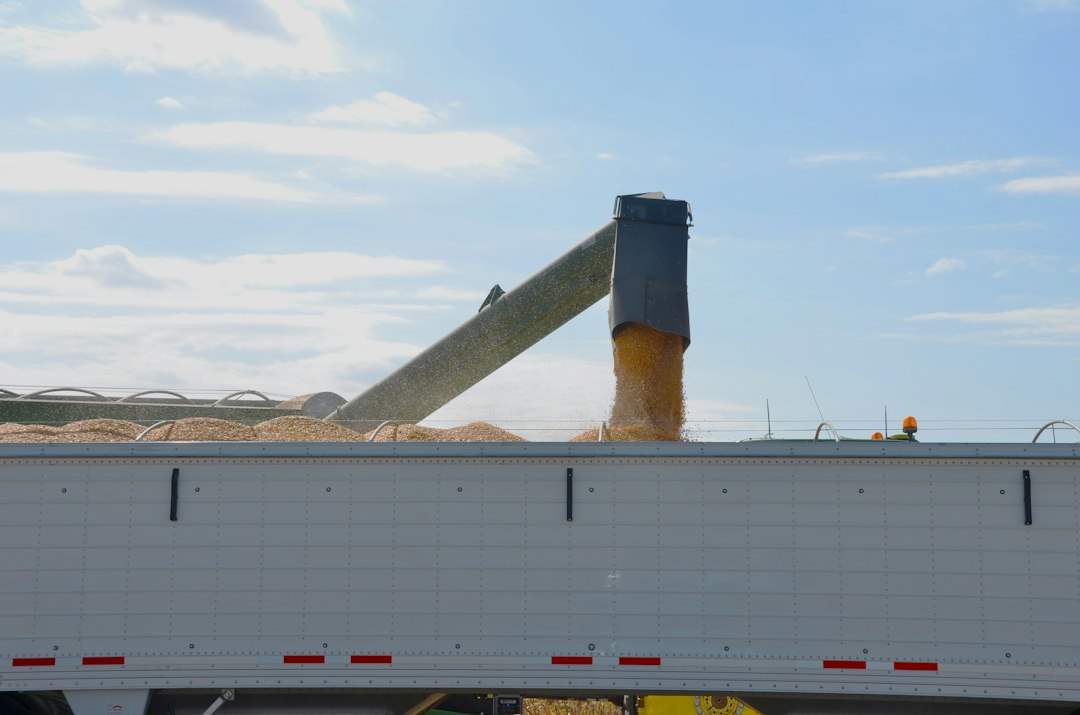
- Photo: Roger Starnes Sr / Unsplash