International Agro — Issue 18
In Brazil, the same Newcastle disease virus drew three different maps, one for each buyer's level of trust. In India, rice only turns into public money if it is tied to a plot in the digital registry and a fingerprint on the reader. In Argentina, the proof Europe asks for now includes labour, and the verifier will be the union.
English Gabriel Rondon
🌐 Em português: Agro Internacional — Edição 18
Brazil watched the same virus turn into three different maps, India only pays for the rice a digital registry recognises, and Argentina found out that the proof Europe asks for must also say who did the work. Every week I read the world’s agriculture looking not for the news, but for the layer it hides.
In Brazil, on Friday, 6 November 2026, Uruguay resumed buying Brazilian poultry, and no country kept a ban on the whole of Brazil any longer, according to the Ministry of Agriculture and Livestock (Mapa).
In India, on Sunday, 15 November, the state of Chhattisgarh opens public procurement of the 2026-27 paddy crop, with digital identity and biometrics at the gate, according to The Hitavada.
In Argentina, on 29 October, the rural workers’ union Uatre and the Visec platform presented a labour legality certificate for those exporting soybeans and beef to Europe, according to La Nación.
It looks like three stories. It is one.
Brazil: the chicken exists, what is negotiated is the size of the map of distrust
In last week’s issue, Brazilian meat ran into a proof Europe does not accept. This week, the proof was tested by a virus, and it passed in most of the world.
On 18 October 2026, Mapa confirmed a Newcastle disease outbreak on a commercial turkey farm in Nova Itaberaba, in western Santa Catarina. The government declared a 60-day animal health emergency in four municipalities: Nova Itaberaba, Águas Frias, Coronel Freitas and Nova Erechim.
On 3 November, Mapa confirmed the fourth detection since the emergency was declared, in Nova Erechim, “within the restriction area already established”.
What stands out is the shape of the responses. On 28 October, according to Mapa, there were three maps at once for the same virus.
Uruguay, Mexico and Malaysia suspended the whole of Brazil. China, Chile, Peru, Turkey, Paraguay, Uzbekistan and the Eurasian Economic Union suspended only Santa Catarina. Another 27 markets, among them Japan, the United Kingdom, South Korea, the UAE and the European Union, suspended only the four municipalities.
Then the maps shrank. Mexico narrowed its restriction to Santa Catarina on 30 October, Malaysia on 5 November and Uruguay on 6 November, according to Mapa. China revised its decision in under 24 hours.
“In 2024, it took 74 days. Now, only 19,” said minister André de Paula. According to Mapa, eleven countries still restrict Santa Catarina, with an estimated impact of about 15,000 tonnes a month, close to 3% of average monthly exports of about 500,000 tonnes.
Mapa also did the maths on what trust was worth. In a hypothetical scenario where buyers repeated in 2026 the restrictions of 2024, Brazil would lose about US$954 million a year, US$485 million in China alone, according to the ministry’s own estimate based on 2025 exports.
A detail for readers of Issue 17: the European Union appears among those that closed only the control area. But it has kept Brazilian products of animal origin off its list since 3 September, for lack of proof on antimicrobials. For Brussels, the virus weighs less than the paperwork.
The hidden machinery: chicken from Santa Catarina and chicken from Paraná are the same product. What changed between 2024 and 2026 is the scale at which each buyer is willing to believe the line the Brazilian state draws on the map. Country, state or municipality: each border is a level of trust in another government’s surveillance. The asset Brazil protected this week was not the meat. It was the credibility of its map.
India: the rice exists, the right to sell it to the state is a digital record
The paddy has been harvested. What decides who sells to the government is something else.
The national minimum support price (MSP) for common paddy in the 2026-27 season is ₹2,441 per quintal, approved by the federal cabinet on 13 May 2026, according to News Arena.
Chhattisgarh pays more. The state cabinet approved on 27 October purchases at ₹3,100 per quintal from 15 November, with a cap of 21 quintals per acre and more than 27.5 lakh (2.75 million) farmers expected, according to The Hitavada.
The gap between the two prices is ₹659 per quintal. That is a premium big enough to pull in rice from elsewhere.
So the core of the policy is not the price. It is proof of origin. Farmers with an AgriStack Farmer ID, the digital identity created by the federal programme, do not need to re-register, and procurement uses Digital Crop Survey data and biometric authentication to ensure only “genuine farmers” sell, according to The Hitavada.
According to ByNewsIndia, on 5 August, only the area recorded in the digital crop survey on the AgriStack portal counts for sales this season.
The control continues past the gate. According to Transclew, citing a state government release of 27 October, there are 273 check posts, 131 border centres, QR codes on rice bags and location-tracked vehicles. Selling tokens are issued through an app, in a number tied to each farmer’s land area.
Last season, Deputy Chief Minister Arun Sao already promised an administrative framework “to prevent diversion and recycling of paddy”, according to IANS on 10 October 2025.
The hidden machinery: rice from Chhattisgarh and rice from the neighbouring state are identical in the sack. When the state pays above the market, the grain stops being the scarce good. What becomes scarce is proof that this quintal came from this plot, from this owner. What the farmer really sells to the government is a verified link between grain, land and person.
Argentina: the soybeans and the cattle exist, the proof is now about who works them
In Issue 16, Argentina’s environmental proof got an exchange-traded price, with the Soja Visec delivery condition, and the CRA complained about discounts on cattle outside Visec Carne. This week, the proof gained a second layer: labour.
On 29 October 2026, at the Buenos Aires Grain Exchange, Uatre and Visec presented a labour legality certificate for farms in the soybean and beef chains, according to La Nación.
The design has three parts. Uatre carries out the checks on farms with trained staff. Crisol Proyectos Sociales provides technical oversight. Visec issues the certificate.
“This certificate is not based on a self-declaration procedure,” Margarita Carratu, of Crisol, told La Nación. “It is not just about complying, it is about reducing the cost of proving it.”
Where does the demand come from? The EU regulation 2023/1115 (EUDR) requires soybeans and beef to be produced in line with the legislation of the country of production, and the definition of that legislation includes labour rights, according to the text published on EUR-Lex. The rule applies from 30 December 2026 for large and medium operators, according to La Nación.
But the regulation does not require this certificate or joining Visec, La Nación itself notes. “We did not decide the change, the buyers did,” said Gustavo Idígoras, of Ciara-CEC.
Uatre’s secretary general, José Voytenco, put unregistered rural employment at 70%. Agrolatam, on 30 October, warned the figure should be read with caution, since neither source nor period was given. It is also unclear who will pay for the checks.
On 4 November, the CRA pushed back, according to Infocampo. Under the law, the group said, union delegates may act only as observers, accompanied by inspectors from the authority, under Article 43 of Law 23,551 and Article 26 of Decree 467/88. “Voluntary membership of a private certification platform is not a legal obligation,” the CRA said.
The hidden machinery: labour proof only convinces the European buyer if the one checking is not the employer. The chosen verifier is the union, the party with the opposite interest. That is exactly what gives the certificate credibility abroad, and exactly what makes it intolerable to some producers at home. Visec, which already held the environmental proof, becomes the counter where the social proof is issued too.
The synthesis: the commodity is there, what is contested is the perimeter of proof
Take the three out of this week’s headlines.
In Brazil, the chicken exists, and each buyer decides whether distrust covers a country, a state or four municipalities. In India, the rice exists, and the state only pays for what a registry ties to a plot and a person. In Argentina, the soybeans and the cattle exist, and the proof Europe accepts now requires a verifier from the other side of the table.
In none of the three is the problem the physical thing.
What is contested is the perimeter of proof: how far the seller’s word goes, and where a third party, a registry or a border drawn by someone the buyer trusts becomes necessary. The smaller and more verifiable that perimeter, the less of the commodity sits still.
It is the lesson Brazil knows from the inside: the world’s largest herd barely becomes capital, not for lack of cattle, but for lack of proof a third party will accept. (I wrote about this in The Cattle That Won’t Become Capital.)
The next frontier in agriculture is not producing more. It is drawing proof at the right size, and getting the other side to believe it.
Notes and sources (week of 9 November 2026)
- Brazil, outbreak of 18 October 2026 in Nova Itaberaba, 60-day animal health emergency in the four municipalities, list of countries by scope of restriction (whole of Brazil, Santa Catarina, restriction area), estimate of US$954 million a year and US$485 million in China: Mapa, 28 October 2026.
- Brazil, fourth detection in Nova Erechim, within the restriction area: Mapa, 3 November 2026. Mexico: Mapa, 30 October 2026. Malaysia: Mapa, 5 November 2026.
- Brazil, Uruguay’s decision on 6 November, 19 days against 74 in 2024, China in under 24 hours, eleven countries restricting Santa Catarina, about 15,000 tonnes a month and 3% of an average of about 500,000 tonnes, André de Paula’s statement: Mapa, 7 November 2026.
- India, common paddy MSP of ₹2,441 per quintal for 2026-27: News Arena, 13 May 2026. Chhattisgarh purchases at ₹3,100 per quintal from 15 November, cap of 21 quintals per acre, more than 27.5 lakh farmers, AgriStack Farmer ID, digital crop survey and biometrics: The Hitavada, 28 October 2026.
- India, cabinet decision on 27 October, 273 check posts, 131 border centres, QR codes, tracked vehicles and app-based tokens: Transclew, 28 October 2026. Only the digital crop survey area on AgriStack counts for sales: ByNewsIndia, 5 August 2026. Arun Sao’s statement last season: IANS via Prokerala, 10 October 2025.
- Argentina, presentation of the labour legality certificate on 29 October, roles of Uatre, Crisol and Visec, statements by Margarita Carratu and Gustavo Idígoras, José Voytenco’s 70% estimate, EUDR dates and the caveat that the rule does not require the certificate: La Nación, Belkis Martínez, 29 October 2026. Caution on the 70% figure and cost of the checks: Agrolatam, 30 October 2026.
- Argentina, CRA position, Article 43 of Law 23,551 and Article 26 of Decree 467/88: Infocampo, 4 November 2026. Regulation (EU) 2023/1115, Articles 2 and 3: EUR-Lex.
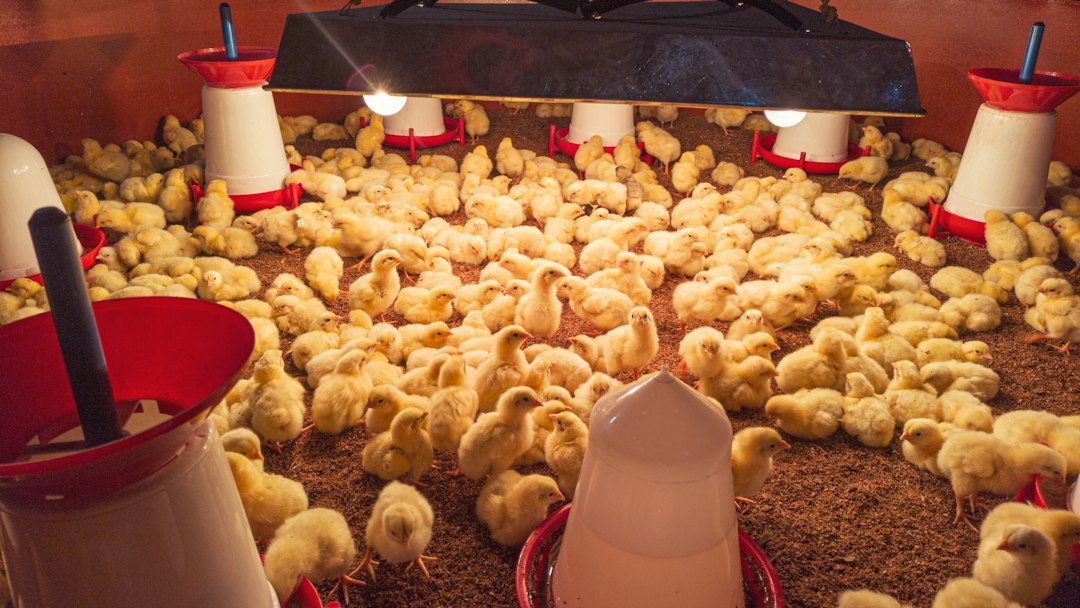
- Photo: Muhammed Minhaj VP / Unsplash