International Agro — Issue 15
In Argentina, meatpackers started demanding traceable cattle for Europe, and the platform that builds the proof warns it certifies nothing. In the United States, China is buying soybeans again, but the buyer is the state and the proof is USDA's daily sales report. In Europe, CAP money was protected in the new budget draft, and the fight moved to the rule that decides who gets how much.
English Gabriel Rondon
🌐 Em português: Agro Internacional — Edição 15
Argentine beef has to prove where it came from, American soybeans depend on a promise only one side has signed in public, and Europe protected its farm money in order to fight over the ruler that divides it. Every week I read the world’s agriculture looking not for the news, but for the layer it hides.
In Argentina, on 16 October 2026, La Nación reported that meatpackers already ask for traceable cattle for everything slaughtered from November onward. The destination is Europe.
In the United States, the same week, Chinese state buyers returned to American soybeans in large lots, according to Reuters, cited by Farm Policy News.
In Europe, on 12 October, the Irish presidency of the Council published its proposal for the 2028-2034 budget. Agriculture came out almost untouched. The dispute came out whole.
It looks like three stories. It is one.
Argentina: the beef exists, what is being manufactured now is proof of origin
The EU deforestation regulation (EUDR) applies from 30 December 2026 for large operators, and from 30 June 2027 for micro and small ones, according to La Nación on 16 October 2026.
Beef exported to the Union has to prove two things: that it complies with the law of the country of origin, and that it is not linked to deforestation after 31 December 2020. The obligation falls on the European importer, but the information only exists on the Argentine side.
So the pressure has already moved down the chain. “The industry is already asking that what is slaughtered from November onward be compliant,” Fernando Storni, president of the Argentine Feedlot Chamber, told La Nación.
The challenge, he said, is reconstructing each animal’s route through the establishments it passed through. Buyers of feeder cattle are already asking their backgrounding suppliers to check their records.
The tool is Visec Carne, an industry-funded platform that gathers the data and produces due diligence documentation for the importer. It had about 20,000 producers registered, according to La Nación.
The most revealing detail came from Daniel Urcía, vice president of Fifra: “There is no certification, there is only the generation of due diligence documentation,” he told La Nación.
And there is no guaranteed premium. “There is no extra payment for meeting the requirement, it is a market demand without which there is no business,” said Matías Vilariño, of the meatpacker Frimsa.
On the same day, 16 October, Senasa published Resolution 898/2026, which authorizes the foot-and-mouth disease foundations to sell and apply the mandatory electronic ear tags, according to La Nación. Each tag must be read by RFID and linked to the producer’s Renspa registration in the SIGSA system before it counts as applied.
The hidden machinery: the Argentine steer is the same as before. What changes is that it now needs a readable past, assembled by three different layers: the state identifies the animal, the industry builds the dossier, and the European importer carries the legal risk. Nobody in this chain certifies. Each one only signs its own part, and the value depends on the parts fitting together.
United States: the soybeans exist, the demand is a state promise
The leaders of the United States and China met in late September 2026. Since then, Chinese state companies have returned to the market, according to Farm Policy News, from the University of Illinois, on 16 October 2026.
This week brought 18 to 23 cargoes, or 1.2 to 1.5 million tons, according to Reuters calculations cited by Farm Policy News. USDA confirmed on 16 October a sale of 558,000 tons of soybeans to China for the 2026/27 marketing year, according to Michigan Farm News, republished by Grain Journal.
The target announced by the White House is 25 million tons for the 2026/27 marketing year. Reuters calculates about 15 million already bought, according to Farm Policy News. Beijing has not publicly confirmed the figure, according to Bloomberg.
The buyer is the state. US soybeans are not competitive for private Chinese crushers, according to Farm Policy News: they face a 13% tariff in China, including an additional 10% levy, against 3% for Brazilian soybeans.
On 28 September, China’s Ministry of Commerce announced tariff cuts on various US farm goods but left commercial soybeans out, according to S&P Global, cited by Farm Policy News.
“The additional tariff has reduced the competitiveness of US soybeans for Chinese private crushers,” wrote Sayona Anna John, of S&P Global.
The hidden machinery: in an ordinary market, demand is the sum of thousands of private margin decisions. Here it is a line in an agreement between heads of state, executed by state companies, and verified by American farmers reading USDA’s daily sales report. The soybean is the same. The real buyer is the political relationship, and it can be revised at every summit.
Europe: the farm money was protected, the ruler that divides it was not
On 10 October 2026, the Irish presidency of the Council presented a new negotiating box for the 2028-2034 budget. It cuts 8%, about €141 billion, from the Commission’s proposal, for a total of €1.62 trillion, according to the presidency itself on 12 October.
Agriculture was spared. The presidency kept the national allocations for agriculture and fisheries, and called the CAP a “valued, impactful, and proven” policy.
The fight changed place. According to Alan Matthews’s analysis on the CAP Reform blog, on 11 October 2026, the Irish draft raises the voluntary cap on direct payments per farm from €100,000, as the Commission proposed, to €300,000.
The cap that more than tripled
Voluntary limit on direct payments per farm (€ thousand per year)
Degressivity, which the Commission wanted to start at €20,000, now starts at €100,000, still in square brackets. The agricultural crisis reserve, which the Commission wanted at €900 million a year, falls to €630 million, according to Matthews.
And the allocation key between countries allows a member state to lose up to 20% of its pre-allocated funds in current prices. “A potential fall of 20% in pre-allocated funding in current prices is quite significant,” Matthews wrote.
Leaders debated the budget for more than five hours on 15 October without narrowing their positions, according to Brussels Signal. The conclusions swapped the year-end deadline for a “timely agreement,” and António Costa took over the negotiations himself. There is an informal summit in Dublin on 13 November and a special summit on 26 November.
The hidden machinery: protecting the CAP envelope answers the political question, how much goes to farming. It does not answer the operational one, to whom. The per-farm cap, the degressivity ruler and the key between countries decide whether the same euro reaches a small Irish farmer or a large group in the east. The money exists. What is being negotiated is the formula that recognizes it.
The synthesis: the commodity is there, what is contested is who attests
Take the three out of this week’s headlines.
In Argentina, the steer exists, but it only enters Europe with a past documented by three actors, none of whom signs as a certifier. In the United States, the soybean exists, but Chinese demand is a political promise executed by state companies. In Europe, the farm money exists, but the formula that decides who receives it is still in brackets.
In none of the three is the problem the physical thing.
What decides is the attesting layer: the record that proves origin, the agreement that guarantees the buyer, the rule that recognizes the beneficiary. The commodity is the same before and after. What changes is who is willing to sign for it.
It is the lesson Brazil knows from the inside: the largest cattle herd in the world barely becomes capital, not for lack of cattle, but for lack of proof a third party will accept. (I wrote about it in The Cattle That Won’t Become Capital.)
The next frontier of agriculture is not producing more. It is getting someone, an importer, a government, a budget, to accept the proof that the production is what it claims to be.
Notes and sources (week of 19 October 2026)
- Argentina, EUDR for beef, dates of 30 December 2026 and 30 June 2027, deforestation cutoff of 31 December 2020, meatpackers’ requirement from November, Visec Carne with about 20,000 producers, statements by Fernando Storni, Daniel Urcía and Matías Vilariño: La Nación, 16 October 2026.
- Argentina, Senasa Resolution 898/2026, foot-and-mouth disease foundations, RFID reading, Renspa and SIGSA: La Nación, 16 October 2026.
- US, Chinese state purchases, 18 to 23 cargoes (1.2 to 1.5 million tons), about 15 million tons bought, 25 million ton target, 13% tariff against 3% for Brazil, exclusion of commercial soybeans from the 28 September cuts and quote by Sayona Anna John: Farm Policy News, 16 October 2026. Sale of 558,000 tons confirmed by USDA on 16 October: Grain Journal / Michigan Farm News, 16 October 2026. No public confirmation from Beijing: Bloomberg via Yahoo Finance, 20 September 2026.
- EU, 2028-2034 budget negotiating box, €1.62 trillion, 8% cut (€141 billion), national CAP allocations kept: Irish Presidency of the Council of the EU, 12 October 2026. Voluntary cap of €300,000, degressivity from €100,000, crisis reserve of €630 million and potential 20% fall: Alan Matthews, CAP Reform, 11 October 2026. Summit of 15 and 16 October, “timely agreement,” Costa leading the talks and summits on 13 and 26 November: Brussels Signal, 16 October 2026, and Irish Presidency, 16 October 2026.
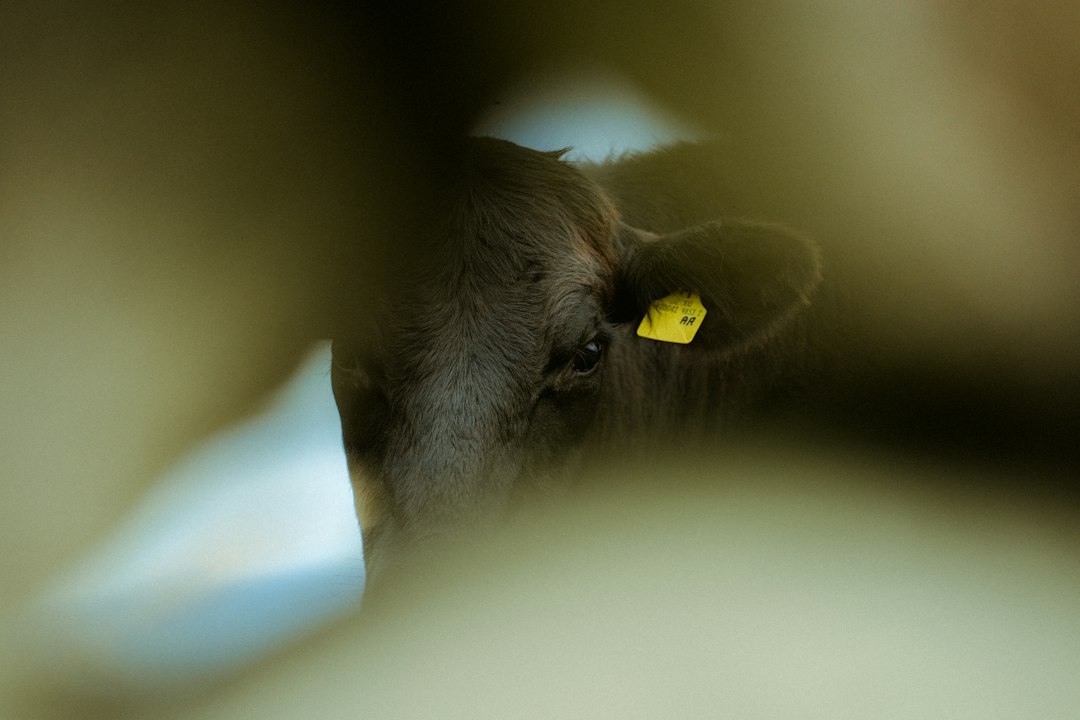
- Photo: Benjamin Hibbert-Hingston / Unsplash