International Agro — Issue 13
In Brazil, China's beef quota ran out on 29 September 2026 and the 55% additional tariff took effect. In the United States, the Farm Bill expired and CRP stopped signing new contracts, with money but no authority. In Europe, ministers found that before splitting the CAP budget they must define who counts as a farmer.
English Gabriel Rondon
🌐 Em português: Agro Internacional — Edição 13
Brazilian cattle hit a counter, the Farm Bill left the money without a pen, and Europe found it must define who a farmer is before paying the farmer. Every week I read the world’s agriculture looking not for the news, but for the layer it hides.
This week Brazil returns to the edition, and it returns through cattle.
On 29 September 2026, according to China’s Ministry of Commerce, Brazilian beef used up the year’s safeguard quota. Since 1 October, every additional tonne pays a 55% additional tariff.
In the United States, the Farm Bill extension expired on 30 September, as the previous issue anticipated. The first concrete effect has appeared: the CRP conservation program stopped signing new contracts.
In Europe, agriculture ministers met in Brussels on 28 September to close the post-2027 CAP. The sticking point is not the size of the budget. It is a definition.
It looks like three stories. It is one.
Brazil: the cattle exists, what ran out is the counter
China’s safeguard on imported beef took effect on 1 January 2026, for three years, under Announcement No. 87 of 2025 of China’s Ministry of Commerce (MOFCOM).
The design is simple. Each country gets an annual quota. For Brazil, 1.106 million tonnes in 2026, according to CNN Brasil citing MOFCOM.
Once the quota fills, from the third day onward, incoming beef pays 55% on top of the tariff already applied.
On 29 September 2026, MOFCOM reported that Brazilian imports covered by the safeguard had reached 100% of the quota. The additional tariff has applied since 1 October, according to China Daily and the Global Times. Three months of the year were still left.
The cattle did not vanish. The pasture is full, the packing plant is licensed, the Chinese buyer is still there. What ran out was room in a counter that sits at a customs office on the other side of the world.
And exporters cannot see that counter in real time. Consultancy Safras & Mercado, quoted by CNN Brasil on 29 September, noted that the delay in official confirmation prolonged uncertainty for exporters and meatpackers, even though import data already pointed to volumes above the limit.
The hidden machinery: a country quota is a ledger shared by every Brazilian meatpacker but written by one party only. The quota belongs to the country, not to each exporter, so whoever ships first takes the room of whoever comes next, and none of them can see how much is left. Whoever keeps the record decides when the same animal starts to be worth less.
United States: the money exists, the pen expired
In the previous issue, the Farm Bill was heading to expiry without a Senate floor vote. On 30 September 2026, it expired.
The first concrete effect came the next day. USDA’s Farm Service Agency (FSA) cannot approve new Conservation Reserve Program (CRP) contracts without congressional action, according to DTN on 1 October 2026.
The detail that matters: the problem is not a lack of money. The 2025 budget reconciliation law secured funding through 2031 for crop insurance and most programs, according to DTN. CRP is stuck on legal authority, not on cash.
“If legislation is passed that re-authorizes USDA’s authority to administer CRP, a new notice will follow,” FSA told DTN.
The calendar is tightening. Commodity and dairy programs officially expire on 31 December 2026, according to Farm Policy News at the University of Illinois. Senate Agriculture Committee Chairman John Boozman indicated USDA can take administrative steps to keep operating through year-end.
Bipartisan negotiations continue through the election recess, into early November. The new law has to pass before January, when the new Congress begins.
“Not having a comprehensive Farm Bill eight years after the last one was passed is extremely frustrating,” Iowa Farmers Union President Aaron Lehman told Farm Policy News.
The hidden machinery: a conservation contract is not a check. It is a ten-to-fifteen-year promise between the producer and the state, and the promise only holds if someone has the authority to sign it. The money is in the budget. What expired was the pen.
Europe: before splitting the money, someone must define who a farmer is
In earlier issues, the CAP fight showed up as a budget cut. On 28 September 2026, at the Agriculture and Fisheries Council in Brussels, it showed up in its rawest form.
Several ministers called for fine-tuning of the definitions of “farmer” and “active farmer”, according to the Council of the European Union. They also asked for clarity on the transition between the current long-term budget and the next one.
The meeting was chaired by Irish minister Martin Heydon, holding the Council’s rotating presidency. The Irish presidency’s goal is a partial general approach on the post-2027 CAP at the 26 and 27 October 2026 meeting, according to the presidency itself.
The other open items are of the same kind. Degressivity and capping of direct payments, that is, how much the per-hectare payment falls as the farm grows, have been pushed into the negotiating box of the long-term budget (MFF), according to the Irish presidency.
The hidden machinery: the European subsidy does not start in the budget, it starts in a register. Whoever fits the definition of “active farmer” gets paid; whoever falls outside does not, however large the land. The land exists, the output exists. What is contested is the rule that decides who is recognised as part of the system.
The synthesis: the commodity is not scarce, the record is
Take this week’s three out of the headline.
In Brazil, the cattle exists and the buyer exists, but the Chinese quota counter reached its end and only one side sees the number. In the United States, the CRP money exists, but the authority to sign contracts expired with the Farm Bill. In Europe, the budget exists, but no one has yet agreed on who is entitled to it.
In none of the three is the problem the physical thing.
What is scarce, contested and decisive is the record: who counts, who signs, who is recognised. It is the layer that decides whether what exists can flow.
It is the same lesson Brazil already knows from the inside, when it found that the world’s largest cattle herd barely becomes capital, not for lack of cattle, but for lack of proof. (I wrote about it in The Cattle That Won’t Become Capital.) This week, the same cattle ran into a record that belongs neither to the animal nor to Brazil.
The next frontier of agriculture is not producing more. It is controlling, or at least seeing, the record where what is produced gets counted.
Notes and sources (week of 5 October 2026)
- Brazil/China, safeguard quota reached on 29 September 2026, Brazil’s quota of 1.106 million tonnes, 55% additional tariff and the Safras & Mercado note: CNN Brasil, 29 September 2026. Additional tariff in force since 1 October 2026, third-day rule and MOFCOM Announcement No. 87 of 2025: China Daily and Global Times, 30 September 2026.
- US, CRP paused after the Farm Bill expired, FSA quote and 2025 reconciliation funding through 2031: DTN, 1 October 2026. 31 December 2026 deadline for commodity and dairy programs, statements by John Boozman and Aaron Lehman: Farm Policy News, University of Illinois, 30 September 2026.
- EU, Agriculture and Fisheries Council of 28 September 2026, definitions of “farmer” and “active farmer” and budget transition: Council of the EU. Partial general approach target of 26 and 27 October 2026 and degressivity/capping in the MFF negotiating box: Irish Presidency of the Council, 28 September 2026.
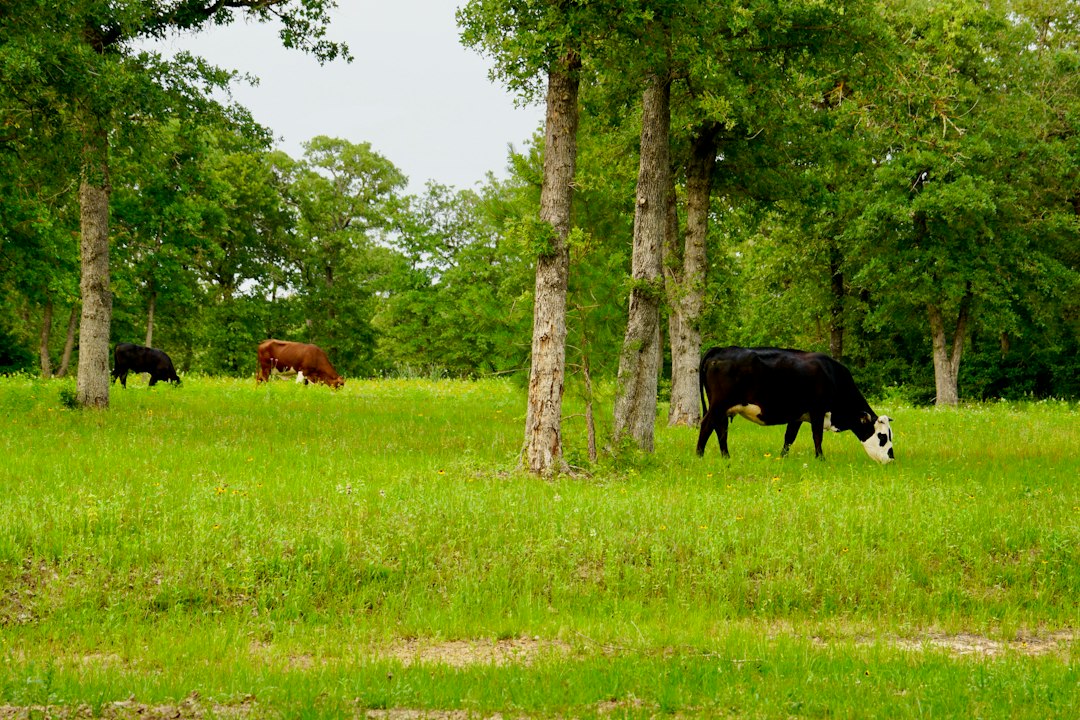
- Photo: David Banning / Unsplash